17 March 2026
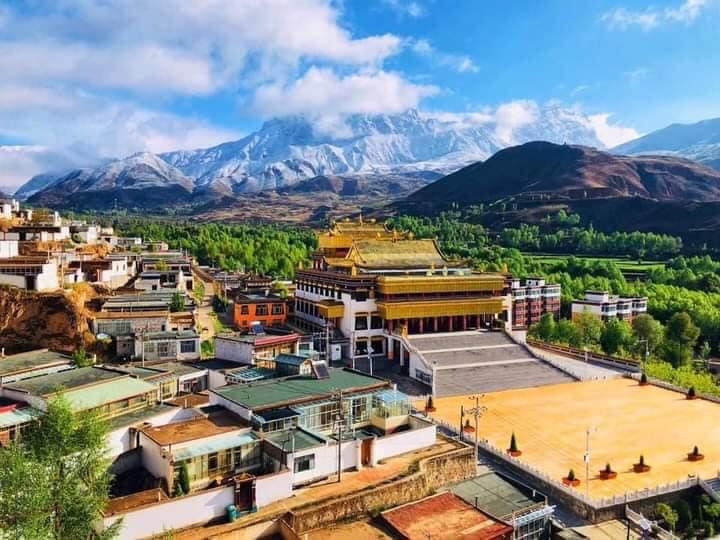
Chinese police authorities tortured a young Tibetan Buddhist monk so severely that he died in custody before returning his body to his monastery and ordering the monks not to disclose information about his death. His death follows a pattern of escalating repression targeting Tibetan Buddhist monasteries.
In December last year, police authorities of Shongshan Tibetan Township (གཤོང་ཤན་བོད་རིགས་ཞང་།) returned the remains of 25-year-old Samten to Ditsa Monastery, according to a Tibet Watch source. The authorities claimed he had suddenly fallen ill and died after an unsuccessful emergency transfer to a hospital. The name of the hospital was not specified, and the date of his detention remains unclear.
Samten had been under police surveillance since 2021, when he was detained after local police accused him of sharing photographs over the messaging application WeChat about the election of the Central Tibetan Administration in exile. Tibetans living in 27 countries outside Chinese-ruled Tibet elect their leaders democratically for the exile administration, founded by the Fourteenth Dalai Lama following the 1959 Tibetan Uprising.
Samten’s monastery was under surveillance in the same year of his detention. In October 2021, local police expelled 50 monks from Ditsa monastery who were aged below 18, and a further 30 from Jhakhyung Monastery located in the same county of Palung (Tibetan:དཔའ་ལུང་རྫོང་ །Chinese: Hualong) in Tsoshar Tibetan Autonomous Prefecture in Amdo’s north-eastern region.
The death of Samten came to light after a series of incidents that point to an intensified, coordinated campaign of surveillance and oppression at Tibetan Buddhist institutions and their leaders in the lead-up to the Dalai Lama’s 90th birthday last year. These include the disappearances of senior monks, raids on prominent monasteries to confiscate images of the Dalai Lama and other exiled religious leaders. In one instance, mandatory “political education” sessions to denounce the Dalai Lama drove a respected Buddhist scholar to suicide.
This pattern falls within China’s most comprehensive assimilation campaign to date. Xi Jinping has imposed a systematic programme of ‘Sinicisation’, attempting to bring Tibetan cultural and religious identity into uniformity with the Han majority. This includes relegating Tibetan to only a language subject in state-run boarding schools and outlawing the tradition of monastic education for children.
The lack of culturally grounded education in Tibetan has previously led university students to run informal classes at monasteries in Palung County – a move that China has forbidden since 2021 under ‘Double Reduction policy’, which states that the reasons for the restrictions are to reduce pressure from homework and off-campus tuitions.
Ditsa Geden Tashi Choeding Ling Monastery, founded in 1903, belongs to the Gelugpa school of Tibetan Buddhism and has played a pivotal role in Tibetan-language education since the 20th century. Its monks were historically known for producing one of the earliest known woodblock-prints for modern Tibetan textbooks and joining a Tibetan language preservation group, founded in December 2009 by a monk at Kangtsa Monastery who had returned from India.