2 August 2026
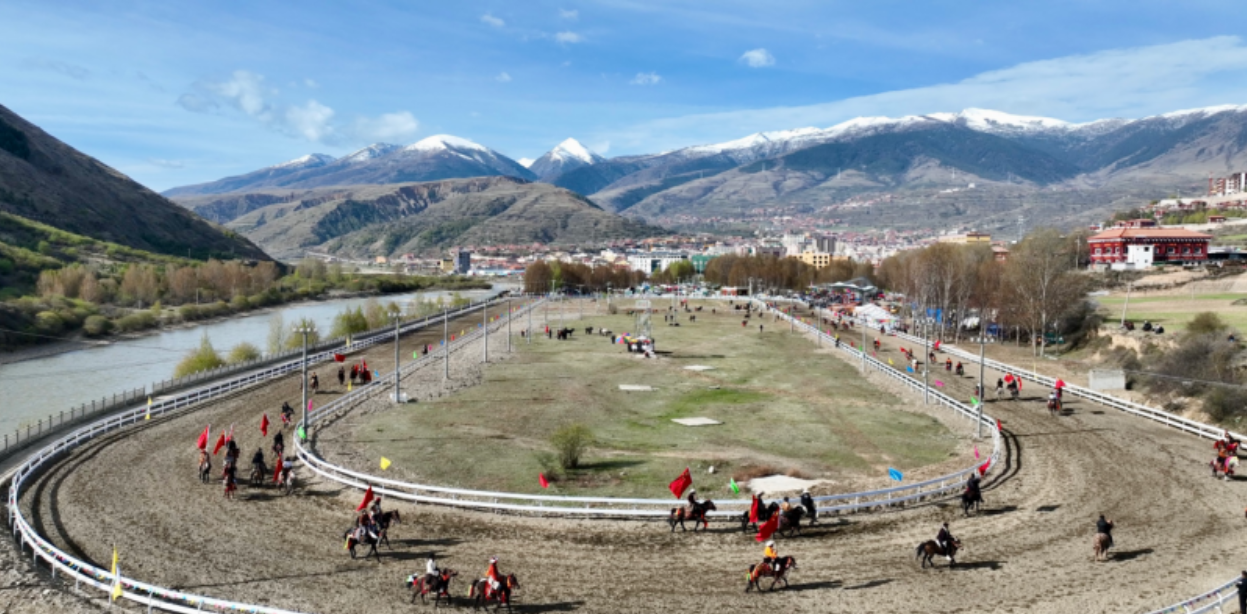
The Chinese government of Drago County in the Kham region of Tibet has transformed a sacred Buddhist landmark into a racecourse and named it after the Chinese Red Army, Tibet Watch has learned from an eyewitness, satellite images, and Chinese media reports.
Once home to a 99-foot Buddha statue in Sengdeng Village, the sacred site has been converted since 2023 into a racecourse and named Drago County Red Army Cavalry Division Racecourse. Since May 2023, the county government has hosted state-led sports and cultural festivals to promote party narratives of history, known as ‘red tourism’.
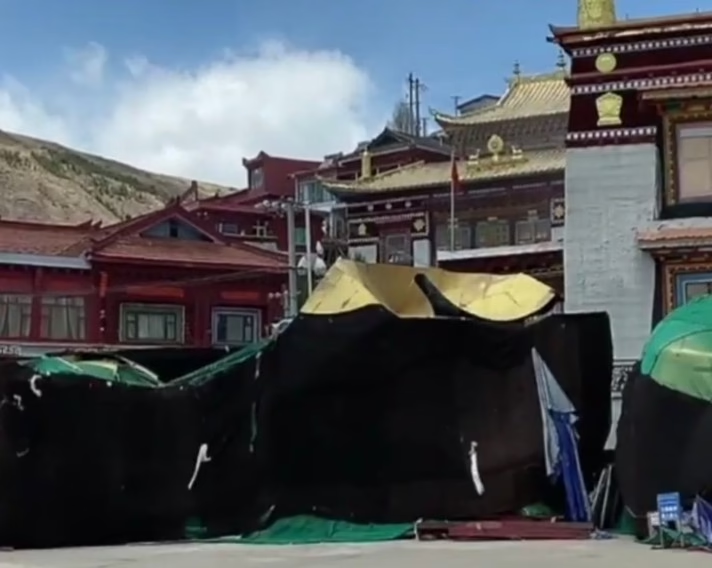
Broken sections of a Maitreya Buddha statue at the entrance of Drago Monastery Image received in February 2023.
The transformation exemplifies the Chinese Party-State’s erasure of public space related to religious faith. The Buddha statue was once the main outdoor Tibetan Buddhist landmark in Drago County local devotees went to for daily circumambulation. It was built with public savings and donations to ward off earthquakes that local Tibetans feared might happen again, like in 1973 at the height of the Cultural Revolution, of which China News recorded a death toll of over two thousand.
Nearly fifty years on, the land consecrated for what was known locally as ‘People’s Buddha’ is turned into a racecourse, replacing even the recent memory described by local Tibetans as a second Cultural Revolution – a recall to the tumultuous period of demolition and persecution launched by Mao Zedong in the last century.
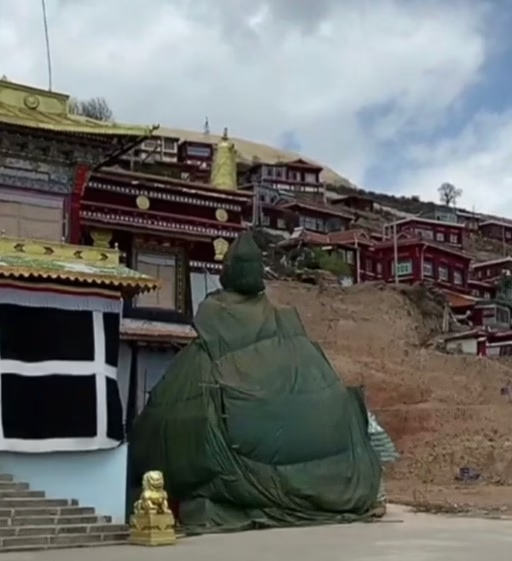
Buddhist statue wrapped in black plastic and bound outside a demolished annex building at Drago Monastery Image received in February 2023.
Before the racecourse was built, in late November 2021, two senior monks from Drago Monastery, Palga and Nyima, were detained at the County police station for over a week, Tibet Watch reported at the time. According to a source interviewed for the reporting, they were denied adequate food, and tortured after being ordered to accept the demolition order of two giant statues of Buddha and convince local Tibetan devotees into compliance. The pair was also told that if they followed the instructions, they could keep the sacred scrolls inside the statues.
For Tibetan Buddhists, the removal of sacred texts inside Buddhist statues qualifies as evisceration and demolition. The consecration ceremony, Zung-drub Rab-né in Tibetan, involves rituals and prayers to invoke the Buddha and Boddhisatvas to sanctify the statues; sacred texts are placed at their head, throat, heart and abdomen, and locked in with medicinal herbs from its lotus throne.
Four years on, an eyewitness, now living in exile, told Tibet Watch of the transformation in Drago County : “Where the Buddha statue once stood, a horse-racing ground has since been built in its place.”
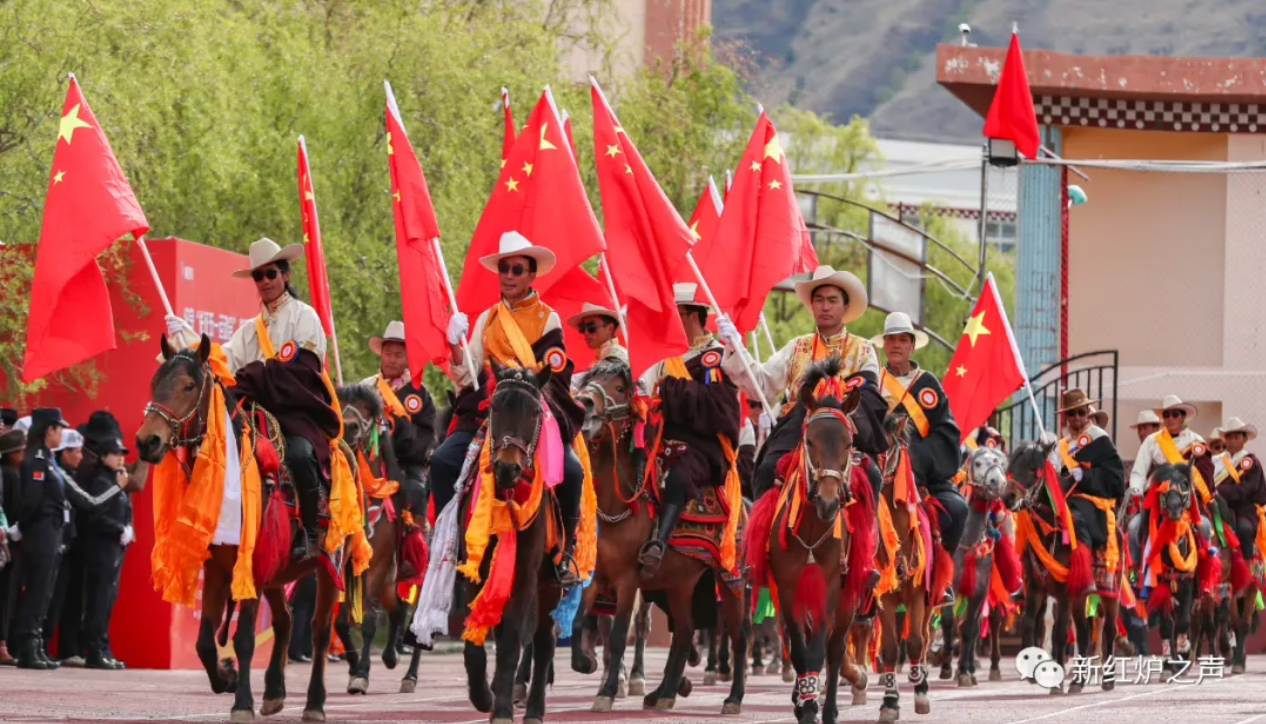
Tibetan men in a mandatory horseback parade carrying red Chinese flags during the Long March May-Day Games in Drago County on May 1, 2023. Image source: WeChat account of Guoma Media.
The first modern horse-racing event at the site was held on May 1, 2023, as part of the event named the Long March May-Day Games. Guoma media featured photos of cultural performances themed as ‘red folk song concert’ and Tibetan men on a mandatory horseback parade carrying red Chinese flags. The events were reported to have commemorated the spirit of the Long March of the Red Army’s cavalry in the area in 1936, a period when the Chinese Communist forces retreated before their eventual rise against the Kuomintang, and annexed Tibet.
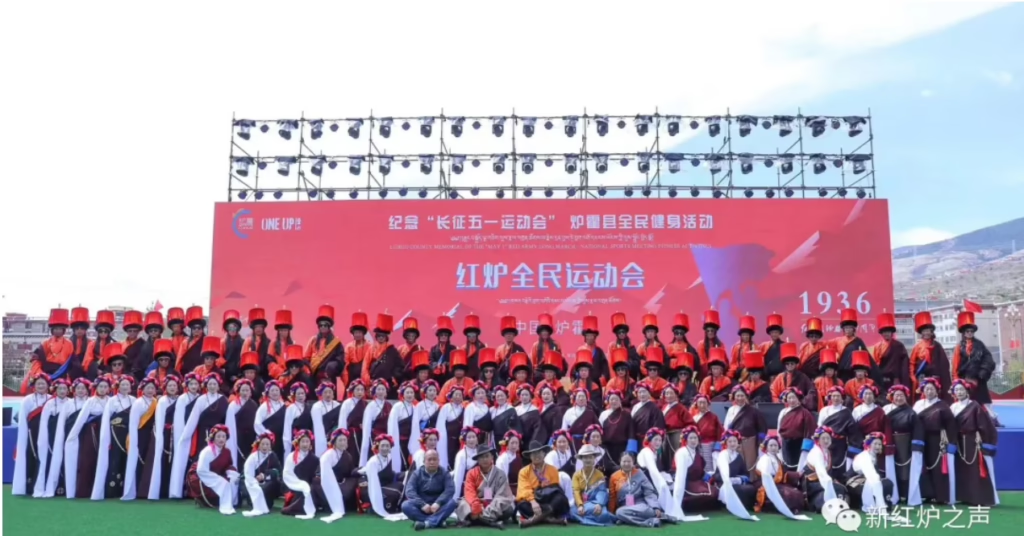
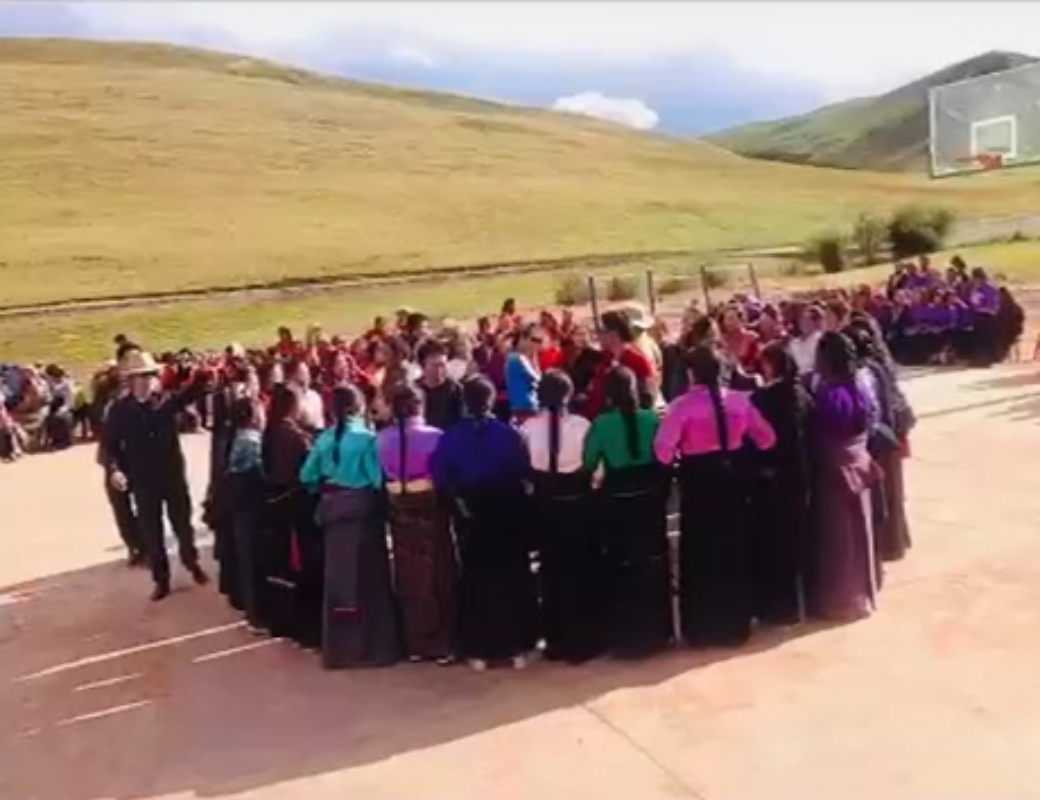
Group photo of Tibetan cultural performers at a Chinese Communist Party-named Red Folk Songs concert during the Long March May-Day Games on May 1, 2023. Image source: Guoma Media.
According to a news report of Guoma Media on May 1, 2023, Gelek Dorje, Secretary of the Drago County Party Committee, is quoted, saying the event was “…also about promoting national fitness, advocating a healthy and civilised lifestyle, and, more importantly, a vivid practice to cultivate the sincere feelings of gratitude, obedience, and following of the Party among the people of Drago.”
In May 2025, the China Horse Industry Association awarded the Drago-based Xianshui Shoucheng Horse Racing Association (炉霍县鲜水首城赛马协会) with a membership certificate and plaque. The People’s Daily’s Sichuan outlet reported the annual event was also part of celebrations for the 75th anniversary of the establishment of Kardze Tibetan Autonomous Prefecture, an administrative division created after Tibet’s invasion.
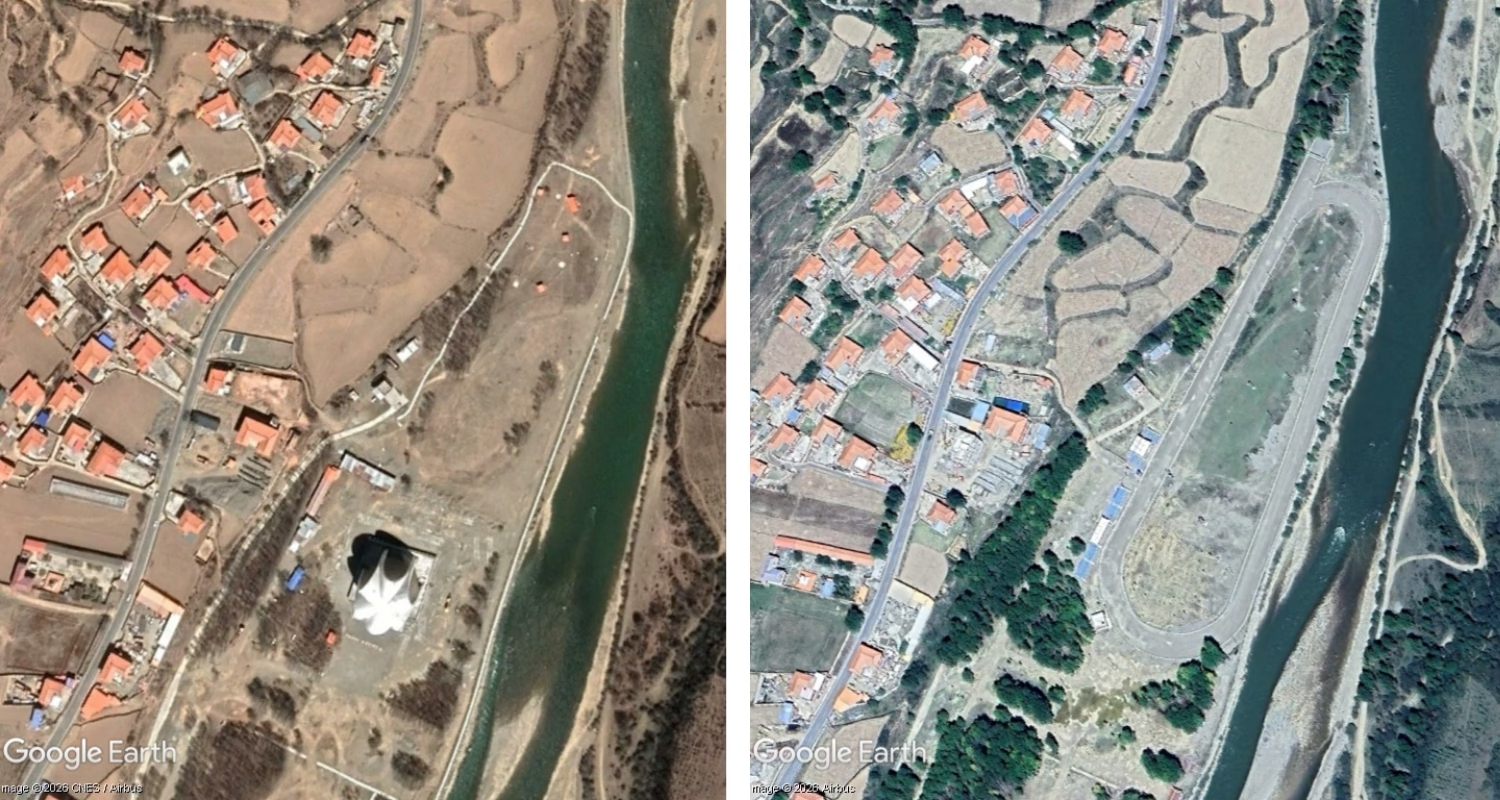
Left: White canopy of the 99-foot Buddha statue next to Nyichu River in Sengdeng Village, Drago County, April 2021. Image source: Google Earth.
Right: Racecourse next to Nyichu River in Sengdeng Village, Drago County, September 2025. Image source: Google Earth.
Satellite images from September 2025 on Google Earth, reviewed by Tibet Watch, show an oval racecourse spanning nearly a kilometre on the riverbank of Nyichu at the former site of the Buddha statue.
Several Chinese media outlets reported that the racecourse has attracted horsemen and a variety of horses from nearly all areas of Tibet, as well as Mongolian areas, indicating that Drago is also becoming a new hub for Party-themed competitive equestrian sports on the Tibetan plateau. Racing and trotting competitions have been held at the same site during harvest festivals traditionally observed in summer between July and August in open grasslands.
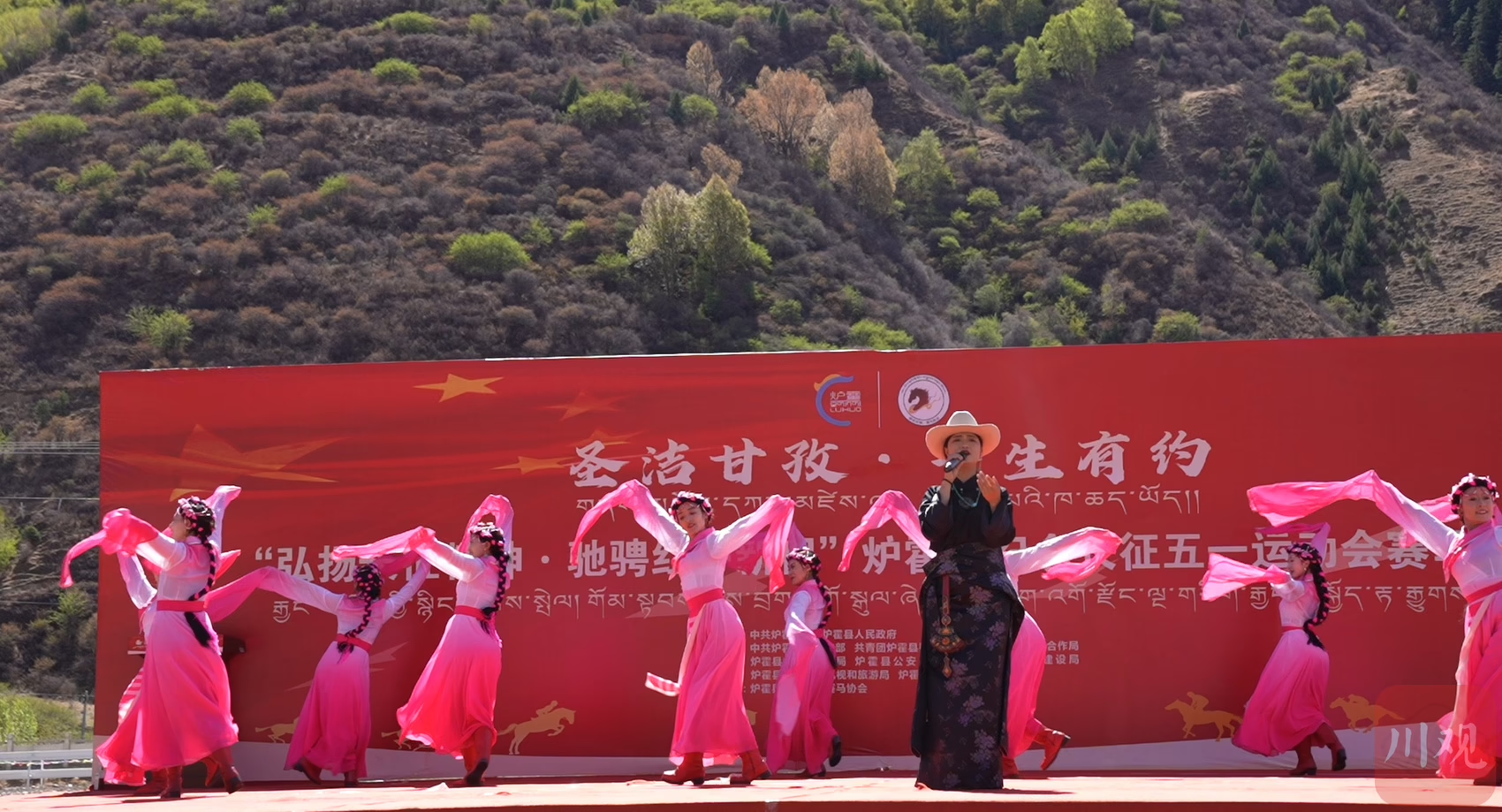
The stage backdrop for the Long March May-Day of 2026 featured the propaganda slogan ” Sacred Kardze, A Lifetime’s Promise.” Image source: Official website of Kardze TV.
A month ago, Kardze TV, the television channel of Drago’s home prefecture, promoted this year’s Long March May Day Games as a sacred event. The report did not provide any background on the land or the statue, both of which had been consecrated before being cleared and removed to make way for the racecourse. Instead, it brandished slogans on red banner proclaiming the week-long event as part of “Sacred Kardze, A Lifetime’s Promise,” “Promoting the Spirit of the Long March, Galloping on a New Journey in Drago,” and an effort “to fully demonstrate the new era of cultural integration and joint progress among various ethnic groups.”
Not far from the racecourse, two massive buildings are being constructed next to a police station, at the former site of Drago Monastic School. The eyewitness said, “ Where the monastery school once stood, multi-storey buildings are now under construction, and the Buddhist school [of Drago Monastery] has not reopened since its demolition.”
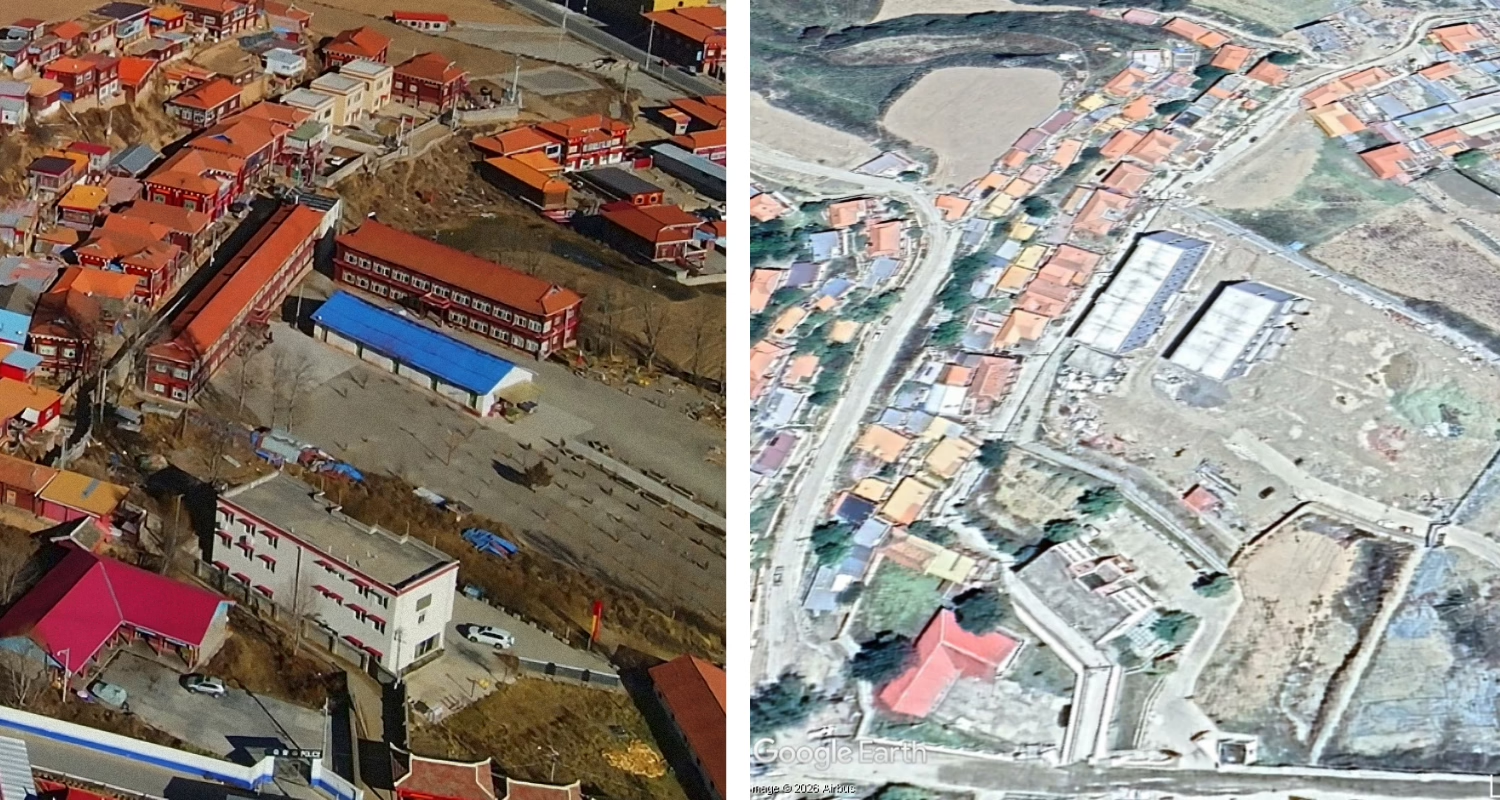
Left: Drago Monastic School next to police station (bottom left corner) before its demolition in late October 2021.
Right: wo buildings under construction beside police station on the former site of Drago Monastic School September 2025 Image source Google Earth.
Satellite images taken in September 2025 on Google Earth also show two multi-storey buildings under construction, as well as a new police station constructed further uphill at the U-turn, entrance gate of Drago Monastery.
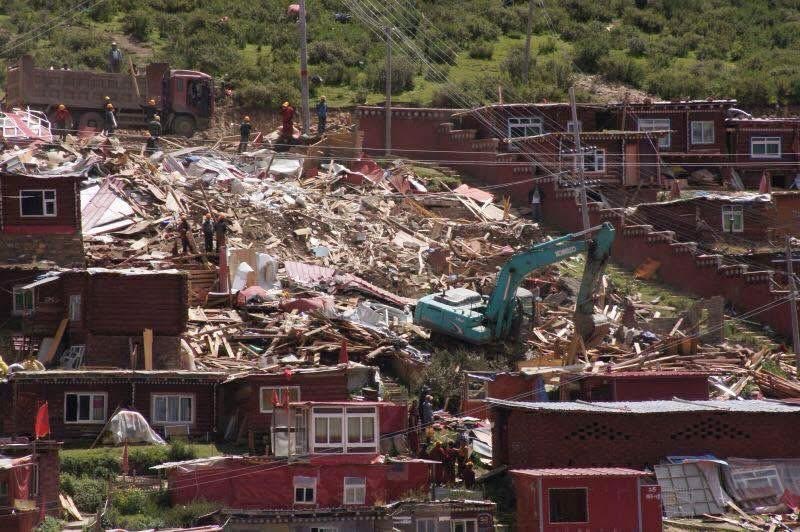
In October 2021, local Tibetans dismantled the school’s wooden panels after County police officers threatened Palga and Nyima into convincing them to do so within four days, according to sources Tibet Watch interviewed in the earlier report. Those sources said local officials had told locals the site would become a media office. Many shops and restaurants nearby were demolished, and 45 giant prayer wheels lining the street outside the school were also removed.
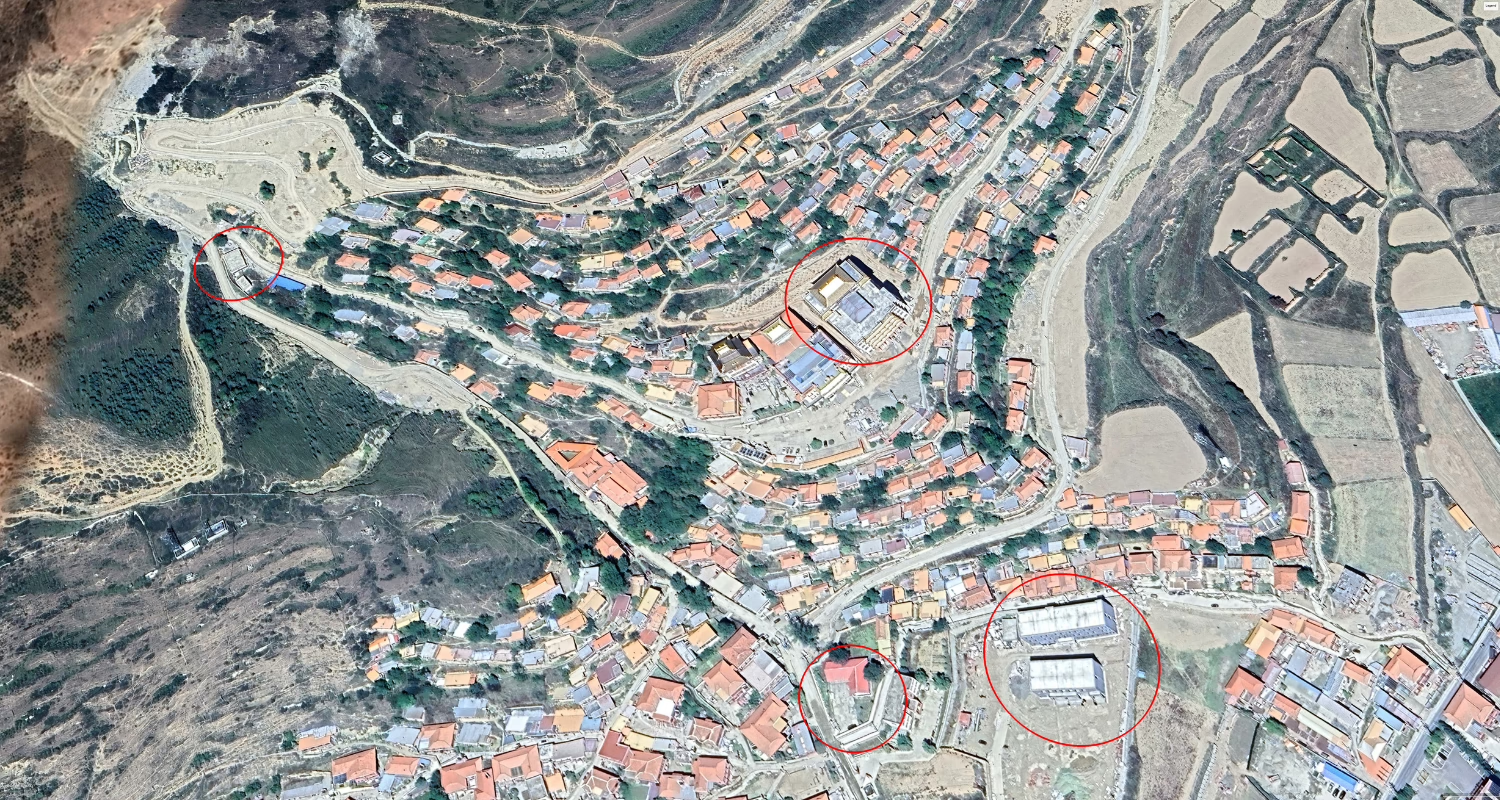
New police station (top left) built after 2021 crackdown, guarding the entrance of Drago Monastery (top right). Old police station (bottom left) built after January 2012 freedom protests, next to buildings under construction (bottom right) at the former site of Drago Monastic School, which was demolished in early November 2021.
Recent images Tibet Watch obtained also show that further uphill from the school, a new police station has been built after the 2021 demolitions, and the outdoor Buddha statue itself has been relocated inside a new expanded annex building of Drago Monastery, which before housed a giant statue of Maitreya, Buddha of the future.
Walls next to both old and new police stations bear slogans of Chinese policies that aim to make Tibetan Buddhism Chinese: “Uphold the Sinicisation of Tibetan Buddhism and forge a strong sense of community for the Chinese nation ( 坚持藏传佛教中国花向, 铸牢中华民族共同体意识 ). ”
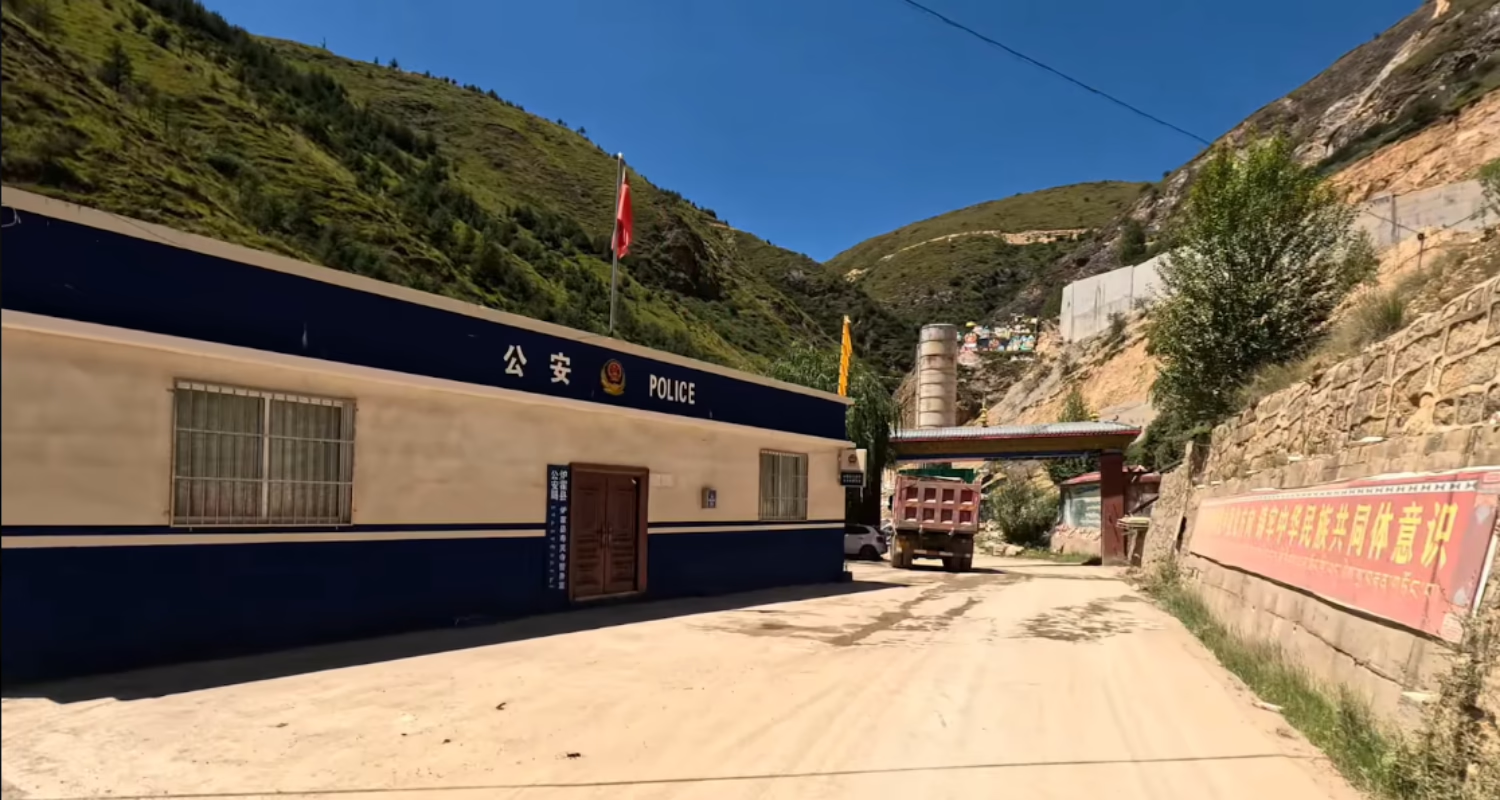
Police station at the entrance gate of Drago Monastery, built after 2021 crackdown in Drago County. Image source: Google Earth, September 2025.
When Drago County came under heightened security following the 2021 demolitions, obtaining new information from local sources about the statue and the planned use of its surrounding area proved impossible.
Intensified surveillance is routine across Tibet, the eyewitness noted, and in Drago, it is Drago Monastery without its school on the sacred hill of Dorje Phagmo – with a new police station guarding its gate, overlooking a racecourse named after the Chinese Red Army. Further downhill, an older police station, built after the January 2012 freedom protests, guards the construction of two multi-storey buildings on the former school compound, and a new wall stands in place of forty-five giant prayer wheels that once lined the circumambulation path.