20 October 2026
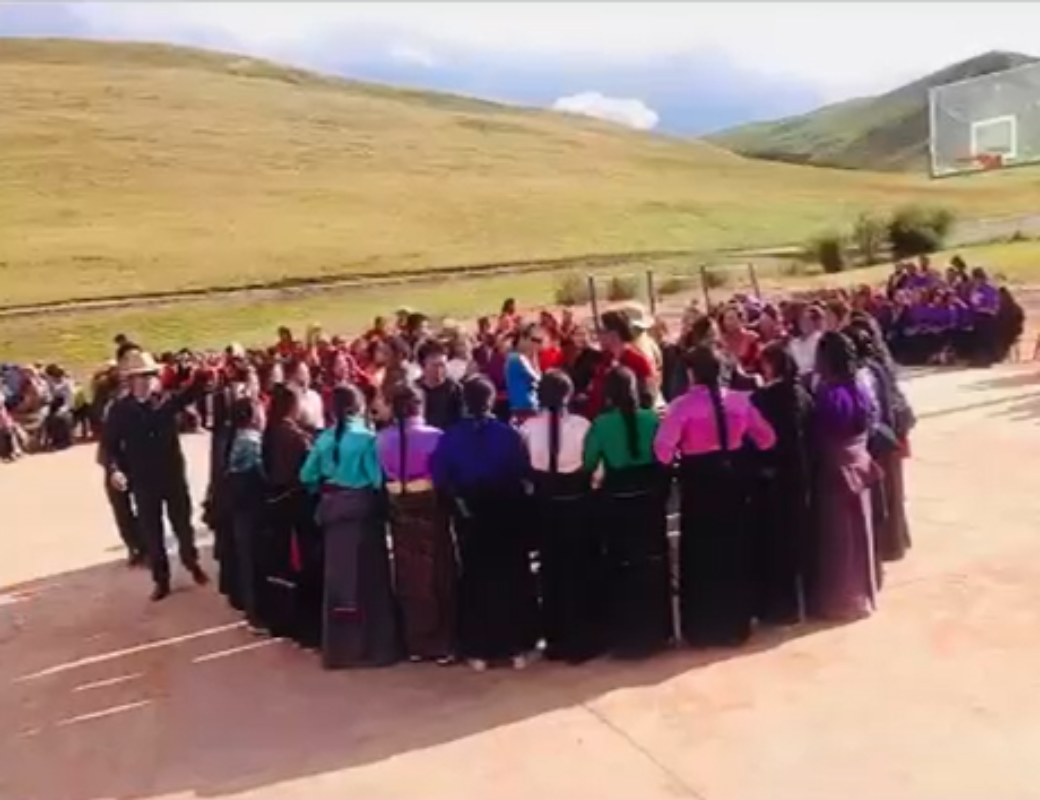
The Chinese authorities have abruptly closed three privately and community-run Tibetan schools in Machen (Chinese: Maqen) County, Golog (Chinese: Guoluo), in the Tibetan area of Amdo, now part of Qinghai. All three placed Tibetan language, culture and Buddhist identity at the heart of their teaching, while also meeting the requirements of China’s nine-year compulsory education curriculum, including teaching in Chinese.
Footage circulated on Tibetan social media accounts of girls weeping and distressed as they were forced to leave their school in the grasslands. “We will never forget the kindness of our teachers,” one of the pupils posted on social media, while another said: “Our lifeline is lost forever.”
- Gangjong Grassland Girls’ School, Ragya township, founded in 2005 by educator Jigme Gyaltsen, was closed towards the end of August. Video footage circulated on Tibetan social media showing uniformed police arriving at the school, and two Tibetan schoolgirls with bowed heads surveying a dormitory room with bedding in disarray on the floor.
- Jasag Village Boarding School, Ragya township, founded by local herders in 1995 and serving nomadic communities, was closed on or around 2 September.
- Golog Tadra Orphan School, Dawu town, founded in 2005 by the late Dr Tawo Lobsang Palden: ordered to close. It has educated thousands of orphans and disadvantaged children.
Tibetan sources say the schools were closed because of their Tibetan-language teaching. It is not clear which government schools will take the pupils, or whether they will find school places at all.
The schools provided more than classroom-based learning; the schools’ founders viewed education as the basis of a sustainable future for herding and farming communities. But this approach runs directly counter to the Party-state’s approach to development, which has moved nomads into settlements, fenced off pasture, and put resource extraction ahead of local livelihoods and the knowledge that has sustained the plateau’s ecology.
The closures come amid heavy surveillance and fear. Renowned educator Jigme Gyaltsen is barred from leaving the Golog area, according to Tibet Watch sources, and two former teachers from his vocational school, closed in 2024, have been questioned by police and warned over their social media posts.
The school shutdowns reflect an escalation of forcible assimilation policies, codified in the new ‘Ethnic Unity’ law in force since 1 July 2026, and follow a series of closures of Tibetan schools in Golog since 2021.
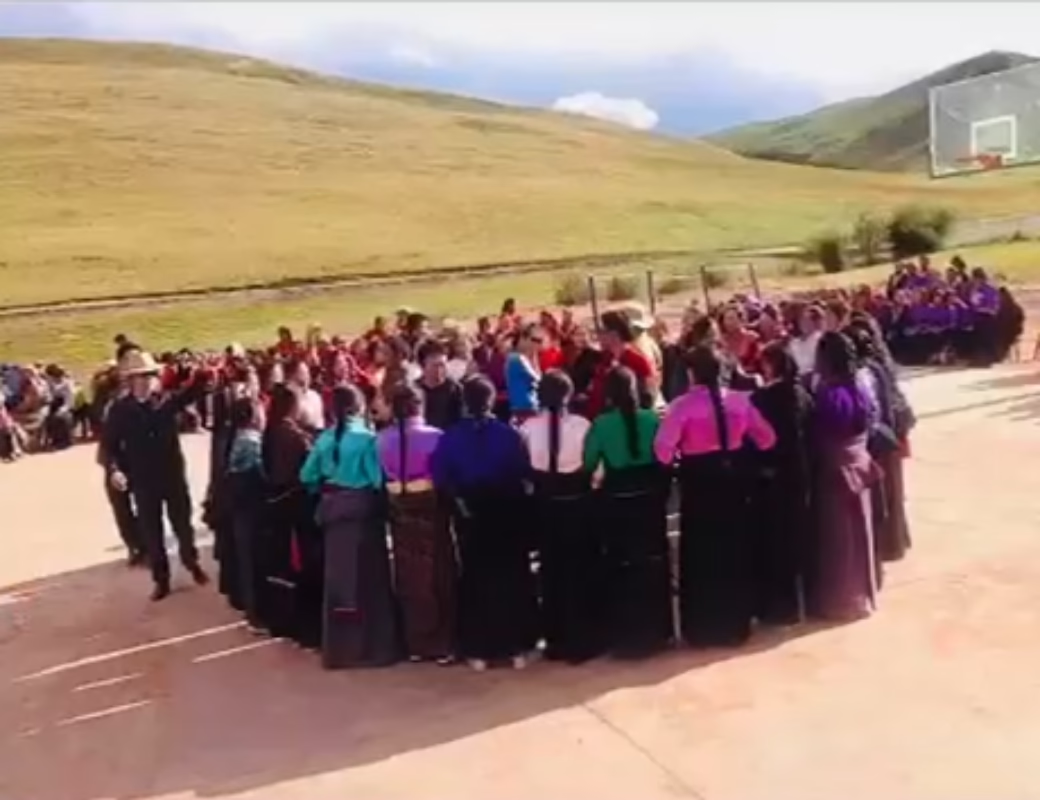
The Gangjong Grassland Girls’ School had been open for 21 years and had over 400 students.
‘The golden sun of our mother tongue has set’: closure of Gangjong Grassland Girls’ School
The Gangjong (or Ragya Jigme Gyaltsen) Grassland Girls’ School, also known as the Prairie Talent Girls School, at the foot of the sacred Amnye Getoe mountain (གནས་རི་ཨ་མྱེས་ཀེ་ཐོ།), around 20 km from Ragya township (རྭ་རྒྱ་གྲོང་རྡལ།), was forced to close on 28 August, according to Tibetan sources.
For nearly 21 years since its founding in 2005 by Tibetan-language educator Jigme Gyaltsen, thousands of Tibetan girls had received a traditional and modern education there. Jigme Gyaltsen summarised his educational philosophy and original vision for the school as: “The education of girls is the education of mothers, and the education of mothers is the foundation of human education.”
This year the school had about 448 students, 44 teachers and 63 staff members, running a six-year primary school and a three-year middle school, fulfilling requirements for the official nine-year compulsory education programme. Hundreds of its middle school graduates went on to universities in Tibetan areas and elsewhere, chiefly the Northwest Minzu University (formerly Northwest University for Nationalities). Since 2023, that university has abolished its dedicated Tibetan language college and replaced it with a merged college for five ethnic groups (Uyghur, Mongolian, Han, Tibetan and Yi), with all instruction in Chinese. The official changes in teaching and the name of this university reflect the Party state’s emphasis on a single Zhonghua minzu (Chinese nation) under Xi Jinping, that treats Tibetans, Uyghurs and others as ethnic components of one nation, not as peoples in their own right.
Given the dangers of open communication over an official decision, current and former students only felt able to express their distress and grief at the school’s closure in the last few days, apparently linked to the timing of the school’s 21st anniversary this month.[1] One post in Tibetan circulating on social media read: “Today is the birthday of our mother school, Gangjong Grassland Girls’ School. It has been 21 years since the school was founded, and we students and teachers have shared those 21 years together. But from this year, we no longer have the fortune to celebrate together. Still, we will never forget Gangjong Grassland Girls’ School, and we will never forget the kindness of our teachers.”
Another message in Tibetan referred to the school as a pillar of life, making an analogy with the central axis placed inside a stupa or Buddhist statue, and saying: “You, the pillar of my life, have gone down forever.” Another message read: “The golden sun of our mother tongue and script has set.” Other posts referred to Jigme Gyaltsen, saying that his “kindness to Tibet is as high as the snow mountains […] As long as you [meaning the school] were here, we had a lifeline.”
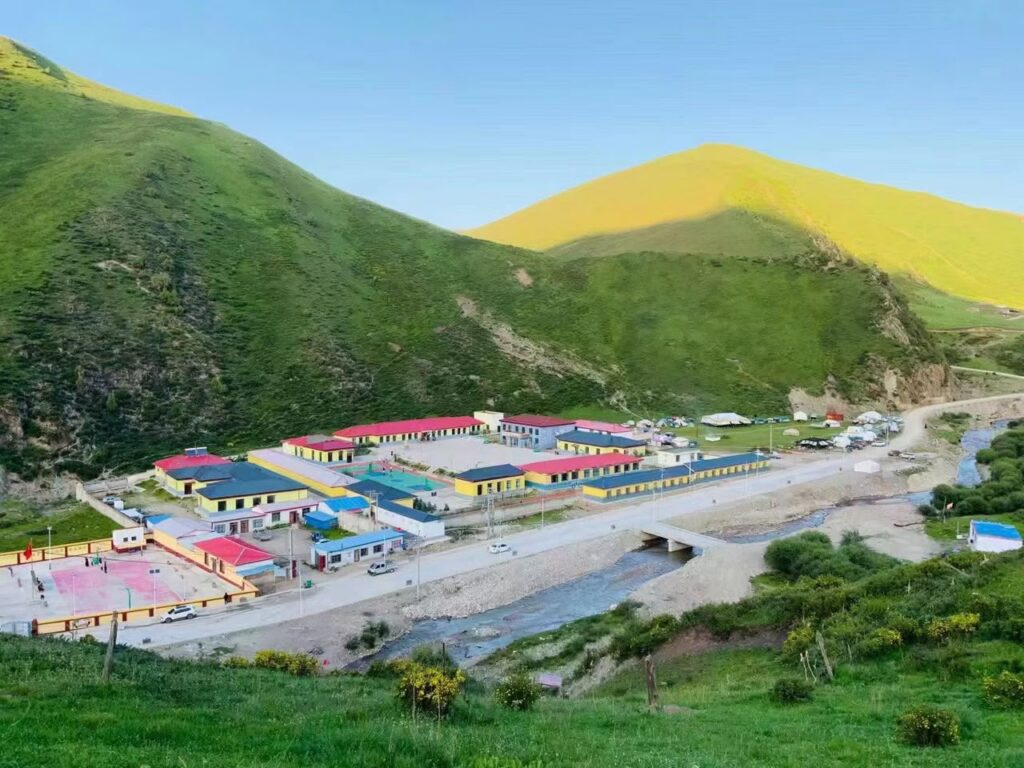
Jasag Village Boarding School in Ragya township served around 300 students, including those from local nomadic communities.
A community school founded by nomads, serving nomads
On or around 2 September, according to Tibet Watch sources, the Jasag Village Boarding School in Ragya township was forced to close. Founded by local Tibetan herders in 1995 and renamed Ragya Township Second Boarding School (拉加镇第二寄校) in 2008, it was a primary school serving children from local nomadic communities, including Jasag Village.
In 2004, in order to ensure the school’s survival, the community asked the local authorities to convert it into a government-affiliated boarding school, but this request was rejected, according to Tibetan sources. A source with knowledge of the school told Tibet Watch: “The school had about 300 students and about 20 teachers and staff. Over the years, local Tibetans endured great hardship to create an environment where young Tibetans could study a range of subjects, with Tibetan as the main language of instruction. They also built considerable infrastructure, such as a meeting hall and dormitories. But in September 2026, the Machen County government closed the school, accusing it of lacking the necessary legal documents to operate.”
The same source said that the school was likely closed because its Tibetan-language education was of a high standard, and so incompatible with China’s mainstreaming of Chinese language and marginalisation of Tibetan.
Third closure: a home and school for orphans
The Golog Tadra (རྟ་བྲག་སློབ་གྲྭ།) primary and lower-middle school in Dawu town, Machen County, Golog, became the third school in the area ordered to shut down in recent weeks. Established by the highly respected late Dr Tawo Lobsang Palden (རྟའུ་བློ་བཟང་དཔལ་ལྡན།) in 2005 under the Chinese government’s nine-year compulsory education system, the school provided academic and vocational instruction in Tibetan and Chinese languages, Buddhist philosophy, science, traditional medicine, astrology, handicrafts and thangka painting for students in need across the Tibetan plateau.
The school has educated thousands of orphans and disadvantaged children from Tibetan areas, offering traditional and modern education along with vocational skills. Hundreds of its students have graduated from universities inside and outside Tibet and found work in various sectors of society.
The school was inspired by Dr Tawo’s own experiences.[2] He came into exile with his parents at the age of eight, and was brought up at a Pestalozzi Children’s Village in Germany. According to the Tadra Project website, “The separation from his parents and getting used to a completely alien culture was very difficult for him, but it offered him and 11 other Tibetan orphaned refugees the possibility of a good schooling. With that, he was able to go on to medical studies and fulfil his long-felt desire to become a doctor. His credo was, ‘Education is the key to a better life for all children.’”[3] Dr Tawo, who lived in Germany until his death in 2019, founded his first school for orphans in 1997 in Tawu (Chinese: Daofu) County in the Tibetan area of Kham (present-day Sichuan), eight years before the Golog school.
A climate of fear
The distress of pupils and teachers in Golog is compounded by fear that they will be penalised for even speaking about the closures of the three schools. “Due to China’s strict crackdown and heavy surveillance across Tibet, no one dares to talk about the closure or the present situation,” said a former pupil of another school in Ragya founded by Jigme Gyaltsen that was closed in 2024. Ginger Yuan, a Chinese dissident now living in the West who worked at the same school before its closure said that she witnessed her “Tibetan friends on social media drowning in tears, yet unable to express their grief in their native language due to censorship on social media like WeChat.”[4]
There are also anxieties over the safety of the teachers and the founder of the girls’ school. According to Tibet Watch sources, the respected and popular Tibetan educator Jigme Gyaltsen (འཇིགས་མེད་རྒྱལ་མཚན།), who founded the Grassland Girls’ School in 2005, has been under heavy surveillance and is not allowed to leave the Golog area.
Two teachers from the Ragya school that was closed in 2024 were questioned by local police and warned not to say anything out of line on social media, according to Tibet Watch sources.
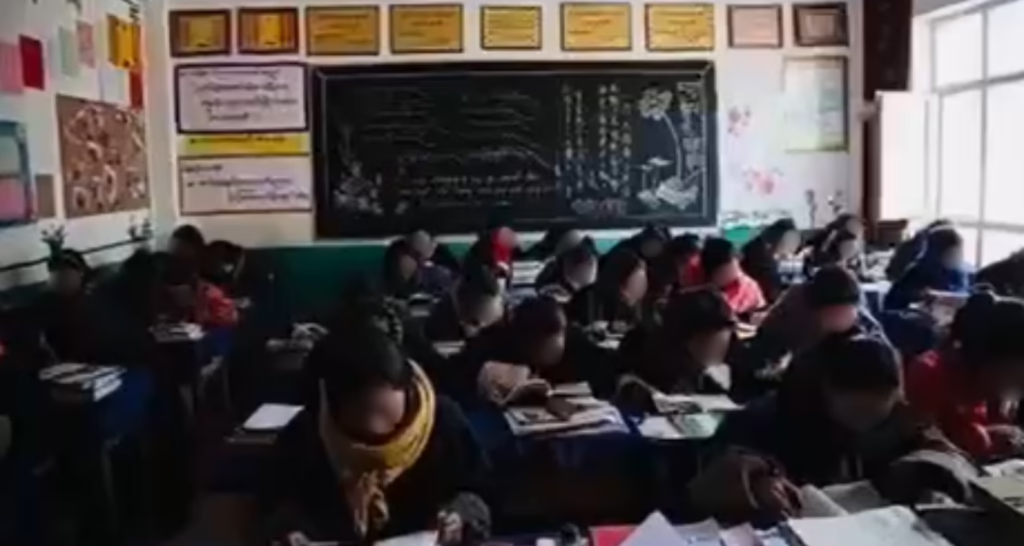
The closure of these schools is part of an ongoing trend in Chinese-occupied Tibet.
‘Black snow’: the 2024 closure of Jigme Gyaltsen’s vocational school
The scenes of distress as girls were forced to leave the Gangjong school mirrored the anguish of 2024, when Jigme Gyaltsen’s vocational school (also known as Snowland Cultural Gems Institute) was closed down.
The vocational school had long offered free admission to students from farming and herding communities and was known as the “Harvard of the Tibetan people”. Tibetans described its closure as like a “black snow” that had fallen over the Qinghai-Tibet Plateau, extinguishing a beacon for the Tibetan people.[5]
Tibet Watch researcher Shede Dawa, who studied there before escaping from Tibet to live in exile, said: “To this day, I have not encountered an education of such high standard. The school was founded in 1994 by a monk, Jigme Gyaltsen, whose vision was to provide children from farming and herding communities with both quality education and a deep grounding in Tibetan cultural heritage — something Chinese state-run schools fail to offer. To achieve this, he invited learned monk-scholars from across the three traditional regions of Tibet to teach.”
Shede Dawa said that over three decades the school had produced more than 3,000 graduates, including doctors, teachers, writers, poets, village leaders, entrepreneurs and filmmakers.
Ginger Yuan, who served as an IT technician at Jigme Gyaltsen’s school before it closed, wrote in an essay about her experience that when the closure of the school was announced in 2024, a Tibetan friend in Ragya told her: “Our Tibetan people’s soul is gone.” The friend’s son told her: “All of Ragya is weeping. All of Golog is weeping. All of Tibet is weeping.” At the same time, she and others marvelled at the spiritual equanimity of the principal, who sought to console them with a Buddhist approach: “Impermanent things are never eternal. The world is ever-changing, following the inevitable law of impermanence. We believe in rebirth, and educating across lifetimes is what truly matters. […] Please, do not grieve; instead, take responsibility for your future.”
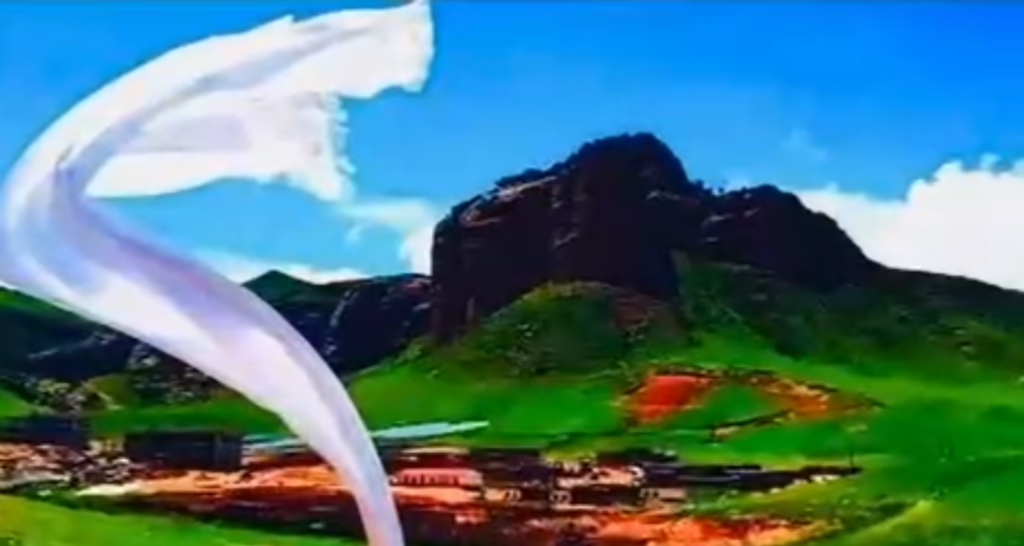
The schools followed an ethos at education and sustainability go hand-in-hand, teaching important skills for agricultural living in Tibet alongside traditional education.
Rooted in the land: education for a sustainable future
None of the three schools was ever only about classroom-based education. Their founders saw education as the foundation of a sustainable future for herding and farming communities. They trained young Tibetans in skills that would let them make a living and contribute to their own society while remaining on their land, which generations of nomads have managed with deep knowledge of the grassland.
With this in mind, in addition to his schools, Jigme Gyaltsen started the Snowland Animal Husbandry Development Association in 2009 to promote the efforts of small cooperatives of herders. These cooperatives worked to promote and enhance local products as a means to protect and revitalise local culture, and by banding together were able to gain access to larger and more distant markets, providing greater stability and long-term sustainability.
However, these initiatives run directly counter to the Chinese Party-state’s model of development, which has relocated nomads into settlements, fenced and enclosed pasture, and prioritised resource extraction and infrastructure over local livelihoods, squandering the knowledge and stewardship that have sustained the plateau’s ecology.
Policy context: Sinicisation and the squeeze on outside support
Depriving Tibetans of Tibetan-language education, forcing them to enrol in government schools where Putonghua (standard Mandarin Chinese) is the main language of instruction and indoctrination, and arresting public intellectuals and scholars at the forefront of protecting Tibetan language, culture and identity, are all part of the CCP’s wider ‘Sinicisation’ strategy, which seeks to enforce compliance with a Chinese cultural nationalism and threatens to eliminate distinctive cultural expression.
Chinese government regulations have also made it increasingly difficult for schools in Tibet to be funded by supporters outside the PRC. China’s Law on the Administration of Overseas NGOs’ Activities, in force since January 2017, placed foreign charities under the supervision of the Ministry of Public Security. It requires them to register with the police and secure an approved Chinese sponsor before working in the PRC, and it treats foreign funding of community initiatives as a potential security threat, particularly in Tibetan areas.
The New York-based Trace Foundation, which for more than two decades had supported Tibetan-language education, publishing, health and rural development across the plateau, including Jigme Gyaltsen’s school, had no choice but to end its support for these projects in 2018. Announcing that it was winding down, it said it had become ever harder to pursue its mission and work directly with communities in Tibet.[6]
A pattern of closures in Golog, despite service to the community consistent with PRC regulations
In July 2021, Tibet Watch documented the closure of another famous school in Golog, Sengdruk Taktse, which prioritised orphans and children from poor families, offering them a home as well as an education. It distinguished itself as a centre of excellence among Tibetan farming and nomadic communities across Tibet, with former students going on to work in government jobs and entrepreneurship, and to become monks and nuns. Co-founder and school head, the monk Khandrul Jigme Kunsang Gyaltsen, had pointed out to officials in vain that the school was established in accordance with the law, with the approval of the relevant prefectural and county governments and that it had abided by the constitution of the People’s Republic of China.
Parents and former students appealed against its closure but were unsuccessful, with one former petitioner writing in lyrical Tibetan of the school as: “A ship that carries the responsibility of education / This school is a home where farmers’ and nomads’ aspirations lie / A centre for learning where children search their path / It is a reddish-brown, ancestral place on which culture depends.”[7]
After the closure of Sengdruk Taktse, the authorities ordered seven more private schools in Darlag, Machen, Gade and Chikdril counties in Amdo to shut down.
And in June this year, the Chinese authorities forced the permanent closure of Hungkar Dorje Vocational High School, a prominent school founded by the renowned Tibetan Buddhist leader Tulku Hungkar Dorje, who died in March 2025 under suspicious circumstances while in Chinese custody in Vietnam. The school had taught Tibetan language and culture since 2008. Posts by students expressing their grief were heavily censored or deleted from social media.
According to Tibetan sources, the main reason for the shutdown was the school’s use of Tibetan as the primary medium of instruction, which the authorities perceived as a failure to comply with the Chinese government’s revised education policy mandating Mandarin.
Endnotes
[1] It is notable that the posts were in the Tibetan language, compared to posts when Jigme Gyaltsen’s second school closed in 2024, that were mainly in Chinese.
[2] Tribute in Tibetan to Dr Tawo, https://mp.weixin.qq.com/s/XyqzTl26UAW8iXFxz2vxxQ
[3] From the Tadra Project website in Germany, https://www.tadra.ch/index_htm_files/Tadra%20E-Jahresbericht%20Engl-19%202.pdf
[4] Account by Ginger Yuan, who is Chinese and served as an IT specialist at the school, posted by tibet.net at: https://tibet.net/the-perseverance-of-an-independent-tibetan-school-the-30-year-journey-of-jigme-gyaltsen-ethnic-vocational-school/
[5] Ibid.
[6] In a statement issued in October 2018, Trace Foundation told its supporters: “Even as we celebrated our accomplishments and our community, we knew that the conditions on the Tibetan Plateau had fundamentally changed for foreign organizations such as ours. We have found it more and more challenging to realize our original mission and be directly involved with communities in Tibet. It is therefore with sadness, but mostly an abundance of gratitude, that I acknowledge the end of the Trace Foundation journey.” https://www.trace.org/to-the-many-friends-of-trace-foundation
[7] Cited in Tibet Watch report, 19 July 2021, https://tibetwatch.org/outcry-from-tibetans-after-school-is-given-orders-to-close/