2 June 2026
Concerns grow for a Tibetan Buddhist monk Chinese police have held in custody for the second time under unknown charges since early February, Tibet Watch has learned.
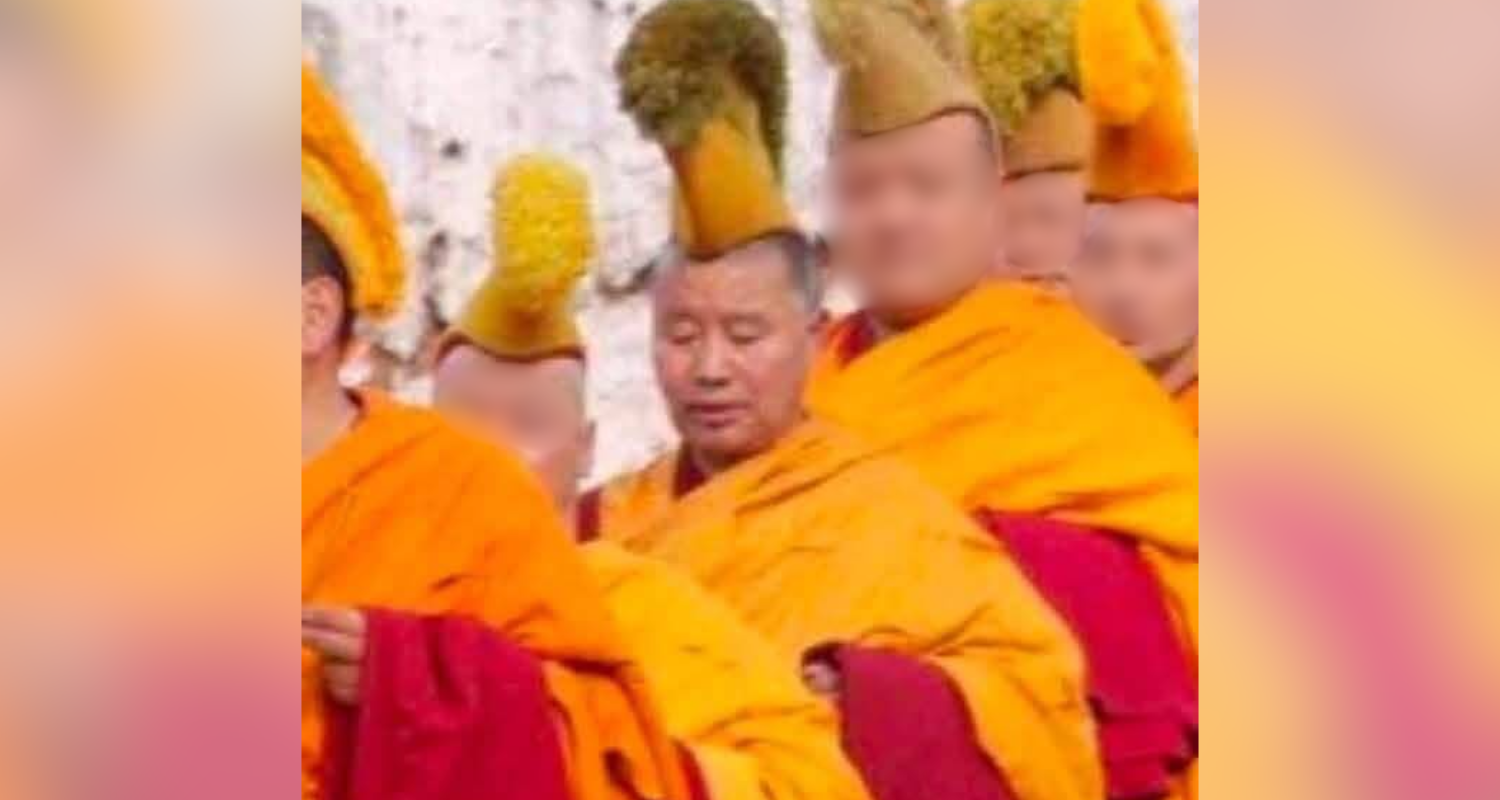
According to a source, in early February, Chinese police of Labrang Township in Sangchu County again took into custody Jamyang Tashi, a Tibetan Buddhist monk from Labrang Tashikhyil Monastery who had been released only two months earlier following a six-month-long arbitrary detention. Due to risks of imprisonment his family could face, Tibet Watch did not contact local sources for further confirmation.
Charges for Jamyang’s re-detention and his well-being remain unknown, according to the source concerned about Jamyang’s welfare. Tibet Watch has been unable to confirm if Jamyang has been allowed to join the daily activities of Labrang Monastery since his first release.
Jamyang had first been detained under suspicion of contact with exiled Tibetans. China routinely detains and imprisons Tibetan Buddhist monks found promoting, receiving, and disseminating materials published by exile-based Tibetan Buddhist institutions – especially all information related to the 90-year-old Fourteenth Dalai Lama who resides in Dharamsala, India.
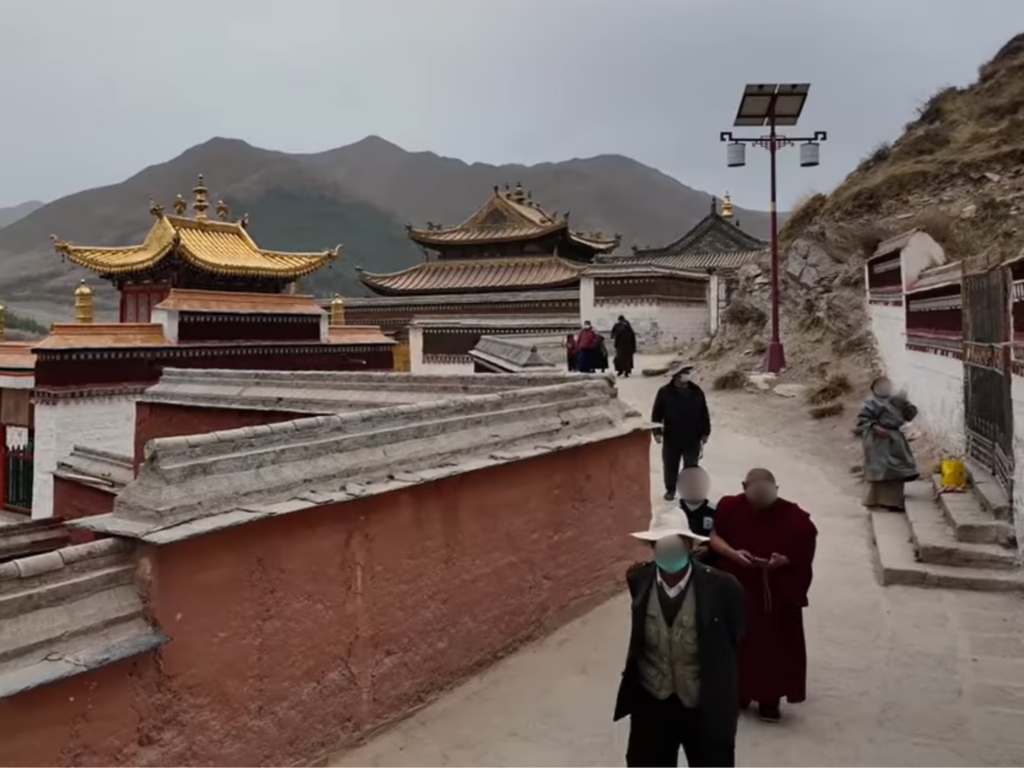
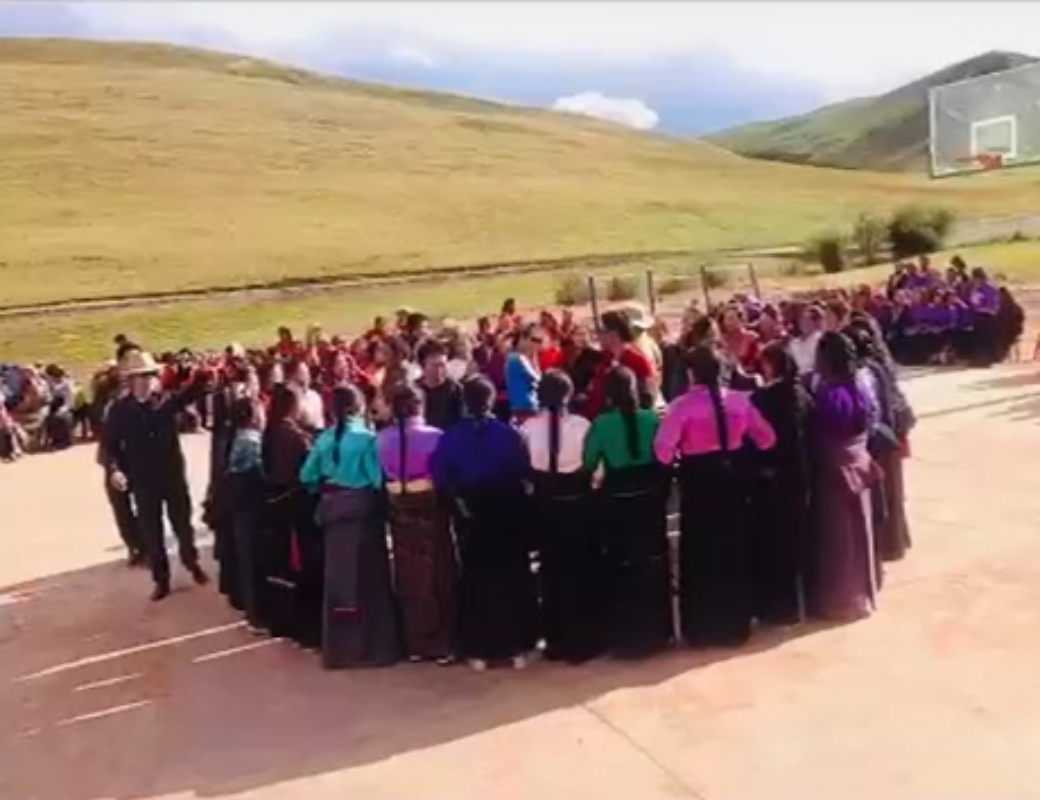
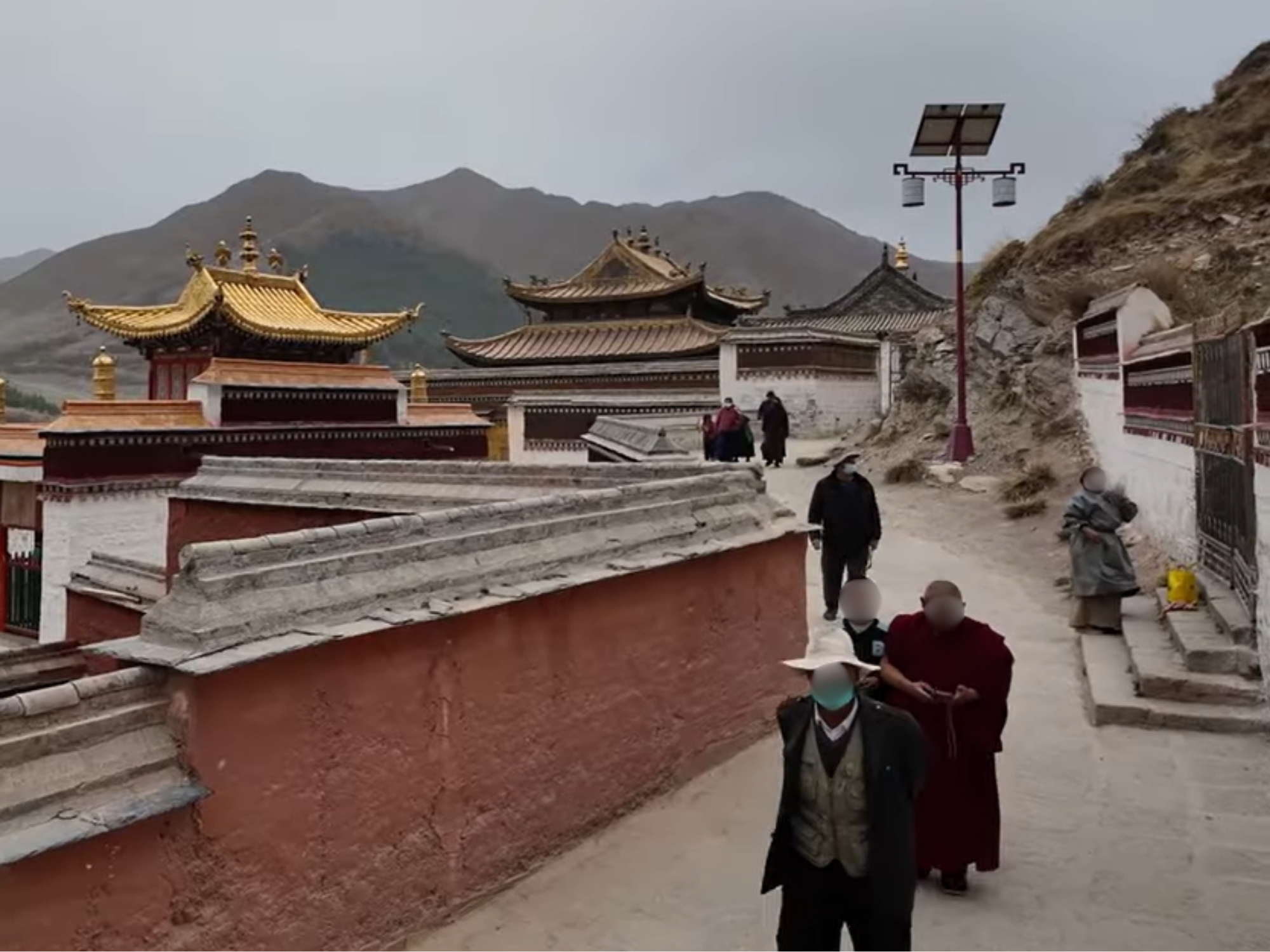
Local Tibetans on kora pathway around Labrang Monastery, Screenshot from Youtube reel by @asiadreamvideo8744 on 23 June 2025
Even messages containing information and receipts of devotional offerings made in the name of the ill and deceased persons to exile-based Tibetan Buddhist institutions, and the Gaden Phodrang trust of the Dalai Lama in particular, risk detention and jail in Tibet.
China denounces exiled and stateless Tibetans as ‘separatists’ for their opposition to China’s oppressive rule in Tibet, and also labels them as part of ‘overseas Chinese’. The United Front Work Department, which Xi Jinping has called a ‘magic weapon’, works with China’s Public and State Security to monitor and use Tibetans with family ties outside Tibet as leverage to further suppress basic freedoms on both ends of the relationship.
China refers to exiled Tibetans who have returned to Tibet as “Returned Overseas Chinese,” describing them as a bridge. At the Third Congress of Returned Overseas Chinese and Their Relatives of the Tibet Autonomous Region in Lhasa, late November 2025, China Tibet Online reported that the Tibet Federation of Returned Overseas Chinese has “ […] adhered to the principle of using overseas Chinese as a bridge, maintained close contact with the overseas Chinese community, protected the rights and interests of overseas Chinese in accordance with the law, expanded overseas ties, actively participated in political consultation and deliberation, and participated in social construction, achieving new results in all aspects of its work.”
The weaponisation of familial and other close relationships that China describes as ‘bridge’ is reinforced by digital surveillance. This has created a feedback loop of self-censorship, breakdown of trust and genuine connection across Tibet and beyond, as family of anyone detained or imprisoned are limited and suspended from professional opportunities and welfare benefits.
The pervasive surveillance has made it impossible to know with certainty the fate of Jamyang Tashi. Chinese authorities have silenced his family with threats and no further information has emerged to date on the well-being and whereabouts of Jigme Sangpo, a Tibetan monk from the same monastery with whom he was first detained in March 2025.
Before Jamyang’s first release, his family members were consistently denied information and visits upon their requests. The refusal of information has previously led the family to fear a secret trial “as other Tibetans have faced in past years”, the same source explained.
Tibet Watch has previously reported on a pattern of arbitrary detention of monks and crackdown on monasteries in the months leading up to the exiled Dalai Lama’s historic 90th birthday last year. Other reports also indicate Tibetan monks having been sentenced in secret after their sudden disappearance.
During their first detention, Jamyang was taken from a detention centre in the Labrang area to a hospital in its county before being transferred, on the same day, to another detention centre in Sangchu County.
In the month following their first detention, Labrang monastery was threatened with investigations and severe punishment if found secretly providing education and residence to young monks under the age of 18. China’s compulsory education system and the Measures for the Administration of Tibetan Buddhist Temples (Order No. 22) prohibit school-age children and adolescents from enrolling – and even entering – monastic institutions.
This falls within the Ethnic Unity Law passed in March this year, following Xi Jinping’s most comprehensive assimilation campaign to eliminate cultural diversity, including Tibetan cultural and religious identity. Xi Jinping has imposed a systematic programme of ‘Sinicisation’ of Tibetan Buddhism, attempting to bring Tibetans and all other 55 nationalities it has officially recognised as ‘ethnic minorities’ into uniformity with the Han majority.
Over a decade ago, the monks of Labrang made global headlines after they joined freedom protests sweeping across Tibet against Chinese rule in 2008 and spoke with international journalists on a state-organised tour, and again in 2012 with solo Tibetan protesters burning alive in a wave of fatal self-immolation protests against authoritarian rule unseen anywhere else.
Labrang Tashikhyil Monastery remains one of the most influential centres of Tibetan Buddhism. It was founded in 1709 by Ngawang Tsöndrü, the First Jamyang Zhepa, during a period of rapid expansion of the Gelug Buddhist institutions, and has long stood as one of the religious and cultural hearts in the Amdo region of Tibet.